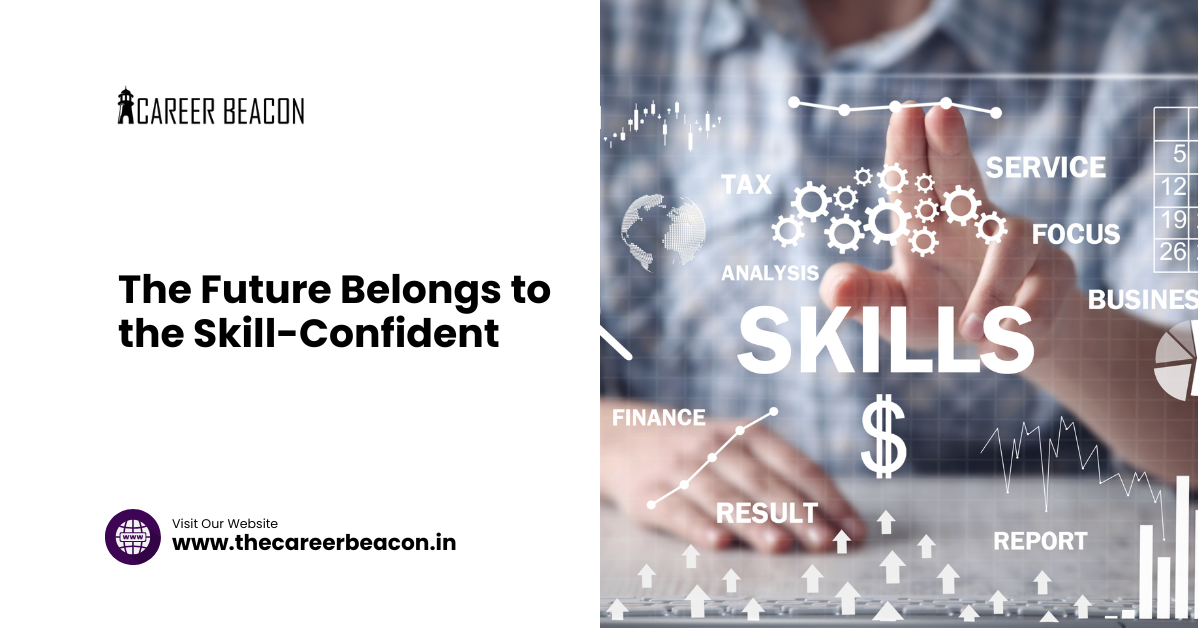
Traditionally, success was defined through three steps: education, employment and career path progression through one job/industry line. However, today’s definition of success is constantly evolving as automation, artificial intelligence and rapid disruptive change alter the world we live in. The new model of success will belong to those that are “Skill-Confident” – individuals who are confident in their skills, can learn quickly, easily adapts as needed throughout their career regardless of where they go or what they do next.
What Does It Mean to Be Skill-Confident?
Being Skill-Confident is not about knowing everything. It’s about believing in your ability to learn, apply, and upgrade skills as required. Skill-confident individuals are comfortable stepping into new roles, exploring unfamiliar tools, and solving problems without waiting for instructions.
Unlike job-confident professionals—who rely on titles or organizations—skill-confident people rely on their competence. They understand that roles may change, but skills remain transferable and valuable across industries.
Why Skills Matter More Than Ever
The pace of change in the job market has accelerated dramatically. New technologies emerge every year, reshaping how we work. Many traditional roles are being automated, while new ones are being created faster than educational systems can update curricula.
Employers today value:
-
Practical skills over theoretical knowledge
-
Adaptability over fixed expertise
-
Problem-solving over rote learning
In this environment, Skill-Confident professionals stand out. They don’t fear change; they prepare for it.
Degrees Still Matter—But Skills Decide Outcomes
Academic degrees continue to play an important role. They build foundational thinking, discipline, and subject awareness. However, a degree alone is no longer a guarantee of employability or career growth.
What truly sets candidates apart is how well they can:
-
Apply knowledge in real situations
-
Communicate ideas clearly
-
Use industry-relevant tools
-
Collaborate across teams
The Skill-Confident individual complements education with hands-on experience, certifications, internships, and continuous learning.
The Rise of Skill-Based Hiring
Across industries, companies are shifting toward skill-based hiring models. Job descriptions now focus more on competencies than on qualifications. Coding tests, case studies, portfolios, and simulations are becoming standard hiring tools.
This shift benefits:
-
Self-taught professionals
-
Career switchers
-
Freelancers and gig workers
-
Students who learn beyond textbooks
Being Skill-Confident allows individuals to compete on ability rather than background.
How to Become Skill-Confident
Building skill confidence is a process, not an overnight achievement. Here are practical steps to develop it:
1. Identify Future-Relevant Skills
Focus on skills that have long-term value—digital literacy, communication, data analysis, critical thinking, leadership, and creativity.
2. Learn by Doing
Online courses are useful, but real confidence comes from application. Work on projects, internships, freelancing, or simulations.
3. Embrace Continuous Learning
Industries evolve quickly. Skill-confident people treat learning as a lifelong habit, not a phase limited to college.
4. Seek Feedback and Improve
Constructive feedback strengthens skills and builds confidence. Learn from mistakes instead of fearing them.
5. Build a Skill Portfolio
Showcase what you can do through projects, case studies, blogs, or digital portfolios. Proof builds confidence.
Why Skill Confidence Shapes the Future
The future of work will reward those who can adapt, reskill, and think independently. Career stability will no longer come from staying in one job but from staying relevant.
Skill-Confident professionals:
-
Navigate career transitions smoothly
-
Stay employable despite disruptions
-
Create opportunities instead of waiting for them
-
Lead innovation rather than follow trends
They are not defined by uncertainty—they thrive in it.