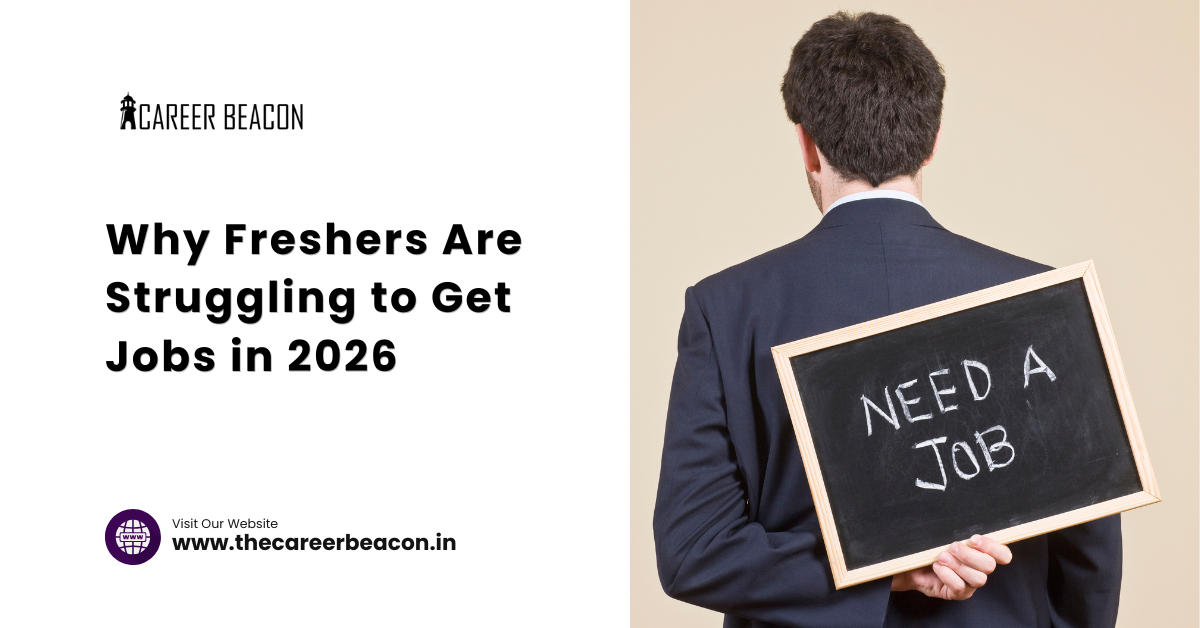
The job market in 2026 is changing at an unprecedented pace; therefore, the number of positions available continues to grow rapidly, creating many new opportunities for job seekers. Unfortunately though, it appears that while these new opportunities are being created, many recent graduates will find themselves with much greater difficulties when trying to obtain your first job than any other class of college graduate has experienced due to having completed their degrees/certifications/internship requirements; hence, why many recent graduates have found themselves face-to-face with challenges associated with graduating college.
So why has this occurred? Are there not enough jobs currently out there? Do young adults possess no skills? Is the way in which companies hire employees changing? Let’s take a closer look.
The Real Reasons Why Freshers Are Struggling to Get Jobs
1. AI Is Reducing Entry-Level Opportunities
One of the biggest changes in 2026 is the rise of artificial intelligence. Companies are now using AI tools to automate repetitive and basic tasks—roles that were traditionally handled by freshers.
As a result, many entry-level jobs are either disappearing or requiring more advanced skills. Freshers are now expected to bring more value from day one, which makes it harder to get hired without prior experience.
2. The Gap Between Skills and Industry Needs
Another major reason why freshers are struggling to get jobs is the gap between what colleges teach and what companies actually need.
Most students still focus on theoretical knowledge, while employers are looking for practical skills like problem-solving, communication, and digital expertise. In 2026, having a degree alone is no longer enough—skills are the real currency.
3. High Competition in the Job Market
With each year, the amount of graduates continues to go up while there are not enough jobs available to meet those demands. The emergence of remote work has enabled worldwide competition to emerge for open positions.
A recent graduate in India can now find that they are competing with people who live all over the world for the same position. This is creating a huge challenge for them as they attempt to differentiate themselves through the use of their skills or experience.
4. Changing Hiring Mindset of Companies
Companies are no longer hiring just to train employees. Instead, they prefer candidates who can contribute immediately.
This shift means freshers are often overlooked in favor of experienced professionals or freelancers. Many companies now prefer contract-based hiring, reducing full-time opportunities for beginners.
What Freshers Can Do to Improve Their Chances
Even though this may appear to be a tough challenge, it is entirely feasible for freshers to create favourable employment outcomes. Provided they learn how to tackle their development through the use of new systems and technologies, they have every possibility of establishing successful career paths.
Focus primarily on developing your abilities rather than simply obtaining university degrees. When you develop in-demand information technology skills such as artificial intelligence tools, communication, and social media/digital platforms, you can enhance your employability and capacity to create a career.
Create a portfolio of your work, secure internships and gain practical experience whilst working; then you will have developed an aggregate of relevant experience.
Ultimately, rather than attempting to compete with artificial intelligence systems, focus on how to leverage the power of artificial intelligence; those who use technology will always be in the right position to benefit from current job market trends.
Conclusion
The reason why freshers are struggling to get jobs in 2026 is a mix of AI disruption, skill gaps, and increased competition. The traditional path of education leading directly to a job is no longer guaranteed.
However, this is also a turning point. Freshers who focus on skills, stay updated, and adapt to change will not just survive—but grow faster than ever in the future job market.