The workplace today is changing rapidly with the integration of automation technology into many industries. As a result, there are many questions about the future of work, including whether machines will take over human jobs or if there continues to be value in having human skills.
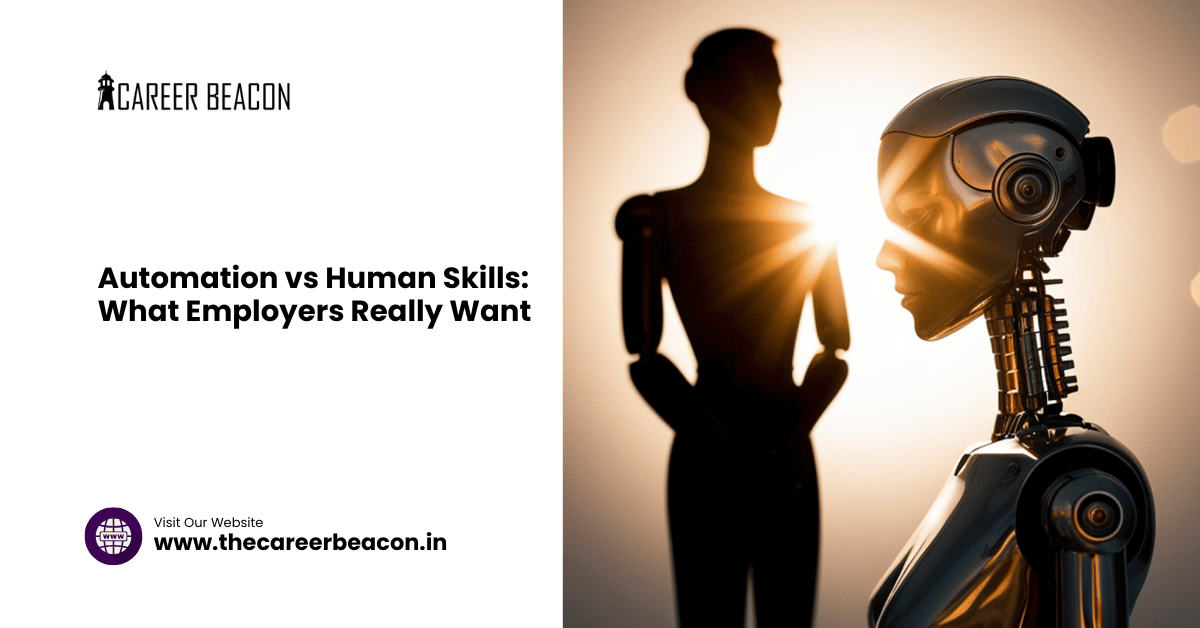
In reality, the answer lies in a combination of the two solutions. The confusion surrounding the topic of Automation versus Human Skills: What do Employers Want from Their Employees is not about making a choice between one option or the other; it is more about determining how they will work together in determining the future of work.
The Rise of Automation in the Workplace
Automation has transformed how businesses operate. From data processing to customer service chatbots, companies are using technology to improve speed, accuracy, and efficiency. Tasks that once took hours can now be completed in seconds.
This shift has helped organizations reduce costs and increase productivity. However, it has also raised concerns among employees who fear job loss or reduced opportunities. While some repetitive roles are being automated, the demand for skilled professionals is not disappearing—it is evolving.
Why Human Skills Still Matter
In today’s automated world, there will always be elements of humanity that can’t be replaced by machines. Companies want their employees to do more than just follow the directions of a boss; they expect these employees to have the ability to think creatively, adapt to change, and solve problems on a daily basis.
Many qualities associated with the human experience – such as creativity, emotional intelligence, communication skills, and ability to think critically – cannot be replaced by automated systems or computers. These types of human skills help employees be able to perform complicated tasks, work well with others in teams and/or groups, and make decisions based on judgement from other people.
One example of how human value is evident is when an automated system analyzes data, it does not interpret that data for any meaning; it is only a computer program that can be programmed to understand the written or spoken word and how to relate that to humanity in general. Without a person or group interpreting data, the value produced from it would be zero!.
What Employers Really Want Today
Nowadays, when selecting employees, companies are looking for employees who can interact with technology rather than replace technology with their own level of skills; thus, there is no “versus” situation anymore between human skill sets and technology because they are being evaluated together for determining if they make a good match/fit for each other.
An employee who possesses both an understanding of how to use automated systems and the ability to provide input based on human experiences will increase productivity while continuing to achieve high levels of quality and creativity.
As an example of this kind of professional, a marketer who utilizes an automated, digital communication tool but understands how customers’ minds work will have a much greater chance of being hired by a company as compared to a marketer using only automated tools to convey messages. Additionally, a data analyst who has both analytical and problem-solving abilities will be considered more valuable than one who strictly relies on data analytic processes.
The Shift Toward Hybrid Skills
The demand in today’s job market is shifting toward what can be called “hybrid skills.” These are a mix of technical knowledge and human abilities. Employers are actively seeking candidates who can adapt to new technologies while also demonstrating strong interpersonal skills.
This means learning automation tools is important, but it is equally important to develop soft skills. Communication, leadership, adaptability, and creativity are becoming key differentiators in hiring decisions.
The future workforce will not be defined by machines replacing humans, but by humans who know how to use machines effectively.
How Students and Professionals Can Prepare
In order to be kept up to date, individuals need to have an emphasis on ongoing education. Only being educated in the past will become obsolete.
Learning how to use automation programs, developing your digital skills, and being aware of industry movements are steps to take in order to remain viable. In addition to that, you should be focusing on your own personal development by developing your personal skills (such as communication and problem-solving).
Employers respect those who have the capability to be flexible and are willing to continue learning. People who adapt rapidly and are willing to change have a greater likelihood of succeeding in an auto-centric environment.
The Future of Work
Looking ahead, the relationship between automation and human skills will become even more interconnected. Automation will handle routine tasks, allowing humans to focus on strategic, creative, and decision-making roles.
This shift will not eliminate jobs but will redefine them. New roles will emerge that require both technical expertise and human intelligence. The key to success will be the ability to evolve with these changes.
Conclusion
The discussion around Automation vs Human Skills: What Employers Really Want is not about competition—it is about collaboration. Automation brings efficiency and precision, while human skills bring creativity and judgment.
Employers are looking for individuals who can combine both. Those who embrace technology while strengthening their human abilities will have a clear advantage in the job market.
In the end, the future belongs to people who can adapt, learn, and grow alongside automation rather than fear it.