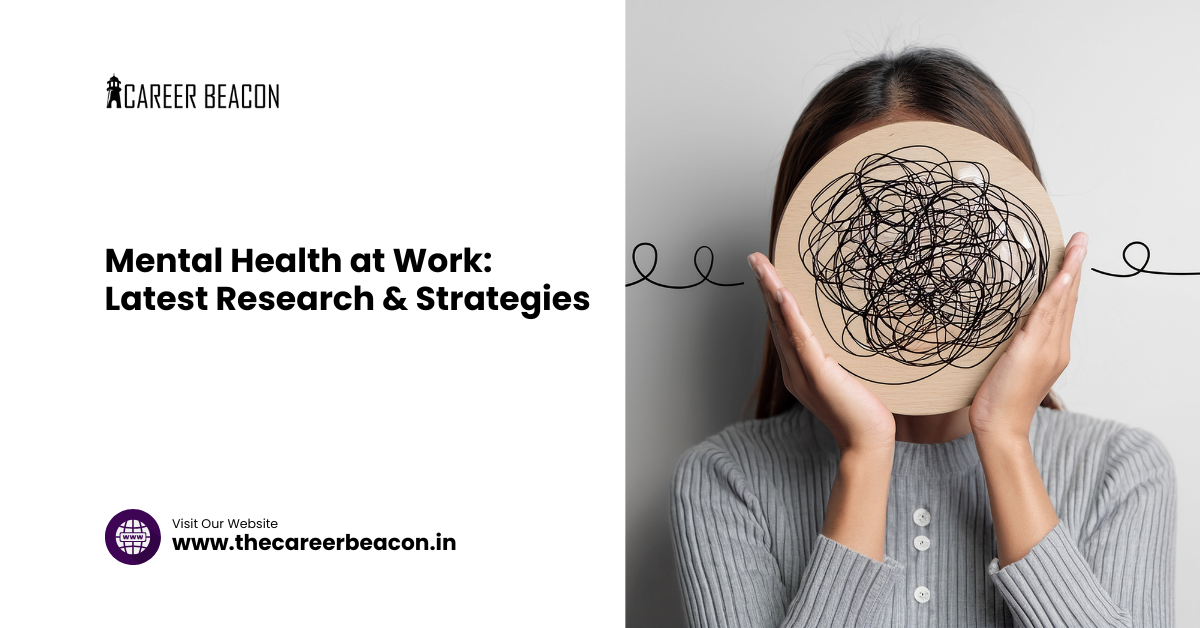
Over the last decade, mental health in the workplace has become less of a “nice to have” conversation and more of a business and human priority. Rising employee stress levels, rising employee burnout, and increasing emotional fatigue have led employers to consider new ways to help employees support their own psychological well-being in the workplace. Recent research indicates that spouse mental health is directly related to absenteeism, productivity, employee retention, employee engagement, and overall business success.
The following blog will be devoted to sharing recent findings associated with mental health within the workplace and practical strategies that both employers and employees can implement in order to build healthier and more supportive working conditions.
Why Mental Health at Work Matters More Than Ever
According to new global research, nearly 20% of the workforce is affected by mental health issues, including anxiety and depression and chronic stress. These issues are being exacerbated by the increased number of hours worked per week; instability in job security; the ease of access to digital devices during times of crisis; and pressure to perform at an extremely high level in their jobs.
The research of WHO shows that, worldwide, the combined annual cost of depression and anxiety to the entire economy due to decreased productivity is about $1 Trillion. This suggests that mental health is not a personal issue; rather, it is a large-scale economic issue for all businesses.
Companies that do not prioritise their employees’ mental health see:
- High levels of absenteeism and presenteeism
- High employee turnover rates
- Low employee morale and collaboration
- Low overall company performance
On the other hand, companies prioritising their employees’ mental health will have a higher level of engagement, higher levels of job satisfaction and stronger employer branding.
Latest Research Trends in Workplace Mental Health
Burnout, while commonly portrayed as the individual’s weakness, is instead attributed to systemic workplace factors contributing to an imbalance in the organisation. Research indicates that unrealistic expectations placed on employees, a lack of autonomy and control within their job, poor communication among colleagues and supervisors, and a lack of feedback or recognition make them feel as though they have failed as individuals.
Flexible work has enabled many employees to have a better work/life balance, but at the same time, there are greater risks associated with it including increased feelings of loneliness; blurring of personal and professional boundaries, as well as increased amounts of screen time leading to fatigue. Additionally, remote employees find it difficult to “switch off,” leading to increased feelings of emotional exhaustion.
Employees’ performance improves when they work within an atmosphere of psychological safety. Research has shown that employees who have the freedom to express their concerns without the fear of retribution or excessive competition within their teams perform at a much higher level than employees who do not experience such a level of safety.
By providing early mental health support to employees, as well as continuing to check in with employees following the initial contact, it has been demonstrated that minor levels of stress can be prevented from creating a more serious mental health condition.
Common Mental Health Challenges Faced by Employees
Employees today commonly experience:
-
Chronic stress and anxiety
-
Burnout and emotional exhaustion
-
Lack of motivation and disengagement
-
Imposter syndrome
-
Difficulty balancing work and personal life
These challenges are especially common among young professionals, caregivers, frontline workers, and employees in high-pressure roles.
Effective Strategies to Improve Mental Health at Work
1. Create an Open and Supportive Culture
A workplace culture that normalises conversations about mental health is crucial. Leaders and managers should openly discuss well-being, encourage help-seeking, and remove stigma around mental health challenges.
Simple actions such as regular check-ins and empathetic communication can make a big difference.
2. Train Managers in Mental Health Awareness
Managers play a key role in employee well-being. Research shows that employees are more likely to seek help when managers are trained to:
Mental health training should be a standard part of leadership development.
3. Promote Work-Life Balance
Encouraging reasonable working hours, flexible schedules, and regular breaks helps prevent burnout. Organisations should discourage a culture of constant availability and respect personal time, especially in remote and hybrid work models.
4. Provide Access to Professional Support
Access to mental health resources such as counselling services, employee assistance programs (EAPs), or wellness platforms significantly improves employee resilience and coping skills.
Confidential and easily accessible support is essential for effectiveness.
5. Redesign Workloads and Expectations
Research emphasises that no wellness program can compensate for excessive workload or unclear expectations. Organisations should regularly review job roles, deadlines, and staffing levels to ensure work demands are realistic and sustainable.
What Employees Can Do to Protect Their Mental Health
Employees also play an important role in maintaining their mental well-being at work. Some effective strategies include:
-
Setting clear boundaries between work and personal life
-
Taking regular breaks and using leave without guilt
-
Seeking support early instead of waiting for burnout
-
Practising stress-management techniques like mindfulness or exercise
-
Communicating needs and challenges openly when possible
Self-care should be viewed as a professional responsibility, not a luxury.
The Future of Mental Health in the Workplace
In the future, workplaces will place more emphasis on preventive mental health care as opposed to managing crises. Organisations are increasingly incorporating mental health into performance metrics and leadership evaluations, and mental health will also play a large role in the organisation’s core values.
Recent trends include:
• Providing employees with a mental health day as part of the leave policy.
• Offering AI-powered tools for managing well-being.
• Developing mental fitness programmes in conjunction with physical fitness programmes.
• Placing more emphasis on developing emotional intelligence and empathy in leadership.
As new research emerges on this topic, one main takeaway has not changed: organisations that are mentally healthy are more productive, innovative, and sustainable than organisations that do not prioritise mental health.