In today’s rapidly changing world, staying relevant is one of the major professional challenges facing workers. Technology, automation and global competition are transforming industries with dizzying speed. What may have been valuable five years ago is obsolete today. The secret to being successful in this environment? Constant learning.
What is Continuous Learning?
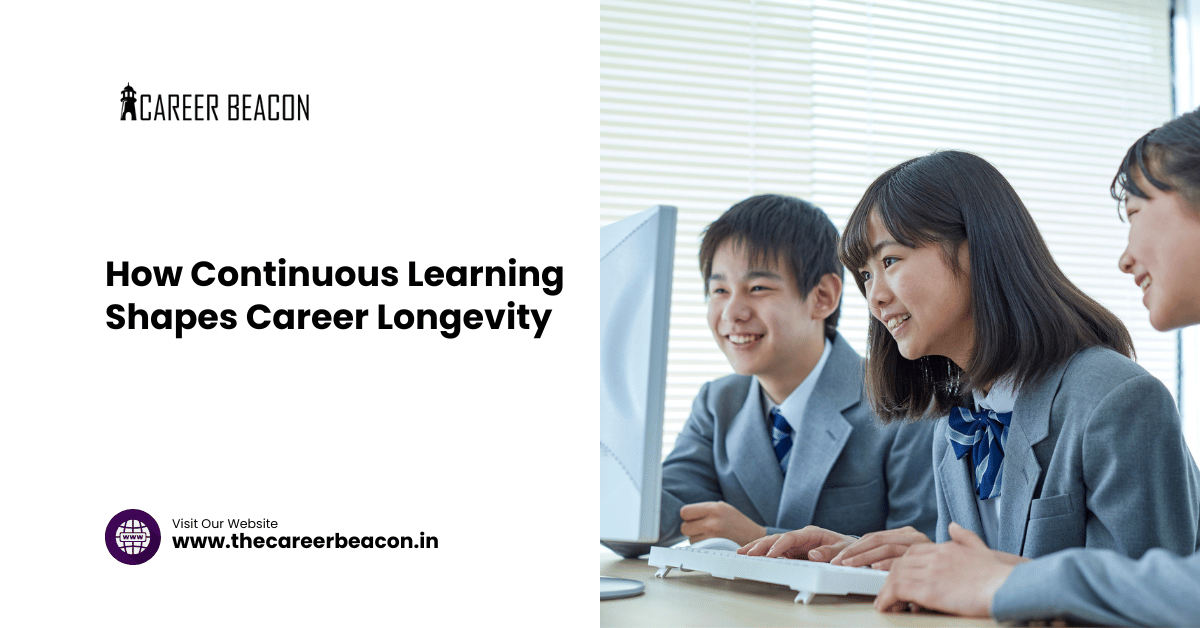
Upgrading your knowledge and abilities on a regular basis during your career is known as continuous learning. Online courses, certificates, workshops, mentorship, and even self-learning through practice and reading are all part of it, which extends beyond traditional schooling. It is the attitude that, regardless of age or occupation, growth never stops.
Why Continuous Learning Matters for Career Longevity
-
Adapting to Change – Every industry is evolving. Professionals who embrace new tools and trends remain competitive.
-
Securing Job Stability – Employers prefer individuals who proactively improve their skills rather than those who resist change.
-
Unlocking New Career Paths – Continuous learning opens doors to career shifts, such as moving from traditional roles to digital-first jobs.
-
Boosting Confidence & Value – The more you learn, the more confident and valuable you become in your workplace.
-
Global Opportunities – Updated skills give access to international jobs, freelance roles, and cross-border projects.
Examples of Continuous Learning in Action
-
A teacher upgrading with EdTech certifications to teach digitally.
-
A software engineer learning AI and cloud computing to remain relevant.
-
A marketing professional mastering data analytics for campaign success.
-
A mid-career executive reskilling into sustainability and green jobs.
These examples show how continuous learning ensures career growth while keeping professionals future-ready.
Benefits Beyond Professional Growth
Continuous learning is not only about jobs — it enhances personal development too. It improves problem-solving, adaptability, and leadership skills. It also helps individuals stay curious, engaged, and motivated, which directly impacts long-term career satisfaction.
How to Build a Habit of Continuous Learning
- Establish Learning Goals: Allocate time each week to learn something new.
- Use Online Platforms: Utilize Coursera, Udemy, or LinkedIn Learning to expand your learning even on your own time.
- Engage with Professional Communities: Participate in webinars, workshops, and networking events.
- Find Mentorship: Learn from established professionals who can assist you in your growth.
- Put Your Knowledge to Good Use: Use your new skills by exploring them on actual projects to develop stronger skills.
The Future of Careers and Learning
By 2030, studies suggest that over 50% of workers will need reskilling due to automation. Careers will no longer be linear but evolving journeys shaped by constant learning. Lifelong learners will have the upper hand — adapting, transitioning, and thriving in diverse roles.
Conclusion
Continuous learning is no longer optional; it is the foundation of career longevity. Professionals who embrace lifelong learning will enjoy not just stability but growth, adaptability, and satisfaction in their careers. In a world where change is the only constant, continuous learning is the ultimate survival skill.