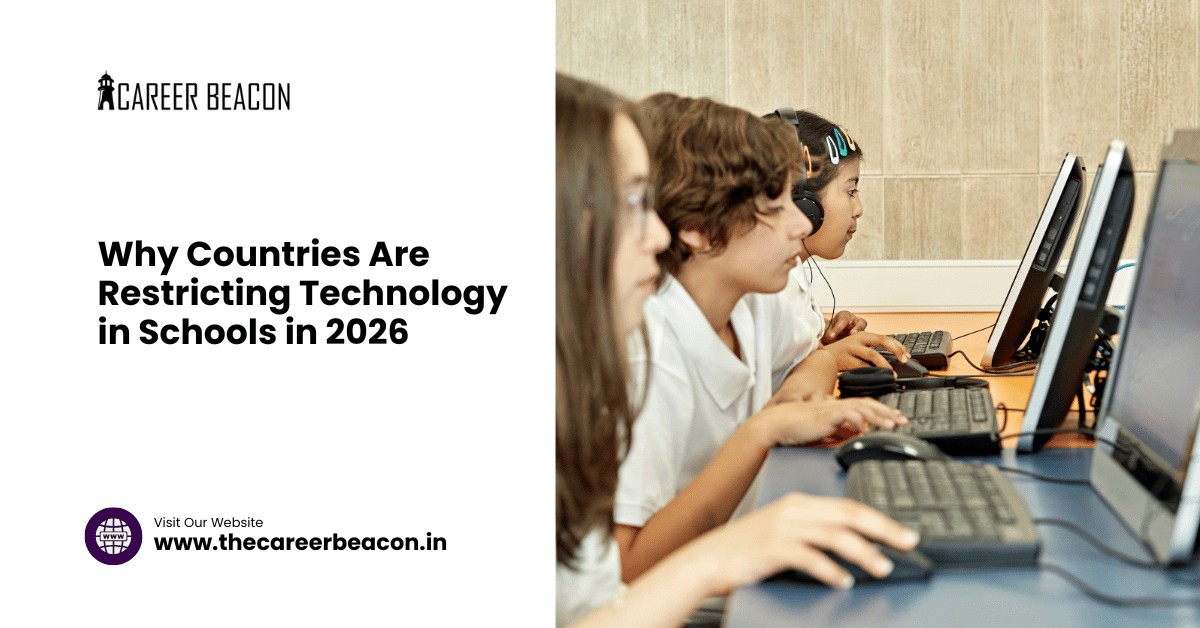
The future of education has long been associated with the advancement of technology; schools are becoming more digitalised, students are using tablets and smartphones more frequently than ever before, and learning is going online. However, in 2026, there appears to be a global shift away from utilising technology in schools. Many countries have begun to place restrictions on the use of digital devices in classrooms.
Investigating why countries are restricting technology within classrooms in 2026 indicates there may be greater issues surrounding the impact of digital instruments on students’ concentration, behaviour, and overall academic experience and performance than previously thought.
The Rise of Technology in Education
Over the past decade, schools rapidly adopted technology to modernize education. Digital boards replaced blackboards, online platforms made learning accessible, and smartphones became a common learning tool.
While these changes improved access to information, they also introduced new challenges. What once seemed like progress is now being carefully re-evaluated.
Growing Concerns Over Distractions
A significant contributor to this transition has been distractions, as students today are always connected to their devices and find it hard to concentrate on their lessons.
Educators worldwide are citing smartphones as one major reason for reduced attention spans in their students. They see students juggling apps and social media and playing games, instead of focusing on the subject matter; eventually, this behaviour will have consequences for academic achievement and classroom discipline.
The rising incidence of disruptive behaviour has prompted many nations to react and rethink how technology is used in schools.
Impact on Mental Health and Social Skills
Schools have been concerned about how much screen time affects their students’ mental well-being. Different studies have shown that too much screen time can result in anxiety, stress, and an inability to concentrate.
Also, there has been a marked decrease in the use of face-to-face communication among students who spend a lot of time on devices. These students tend to have difficulty developing interpersonal skills, such as having conversations, working as part of a team, and being able to empathize with others.
As a result of these findings, schools have begun to limit the amount of technology they allow their students to use, in order to encourage students to engage with each other more naturally and thereby foster better social relationships.
The Move Toward Controlled Usage
It is important to understand that countries are not completely removing technology from education. Instead, they are focusing on controlled and purposeful use.
Many schools are introducing policies where devices are only allowed during specific learning activities. Outside of that, classrooms are becoming device-free to encourage better focus.
This balanced approach ensures that students still benefit from digital learning while avoiding unnecessary distractions.
A Return to Traditional Learning Methods
Interestingly, this shift is also bringing back some traditional methods of teaching. Handwritten notes, classroom discussions, and direct interaction with teachers are gaining importance again.
These methods help students engage more deeply with the subject and improve their ability to think critically. Without constant digital interruptions, learning becomes more focused and effective.
The Debate Around Technology Restrictions
The decision to restrict technology has sparked debate worldwide. Some believe it is a necessary step to improve learning and protect students’ well-being. Others argue that limiting technology could slow down digital progress and reduce students’ exposure to important skills.
Both perspectives have valid points. Technology is essential for future careers, but its overuse can negatively impact education. This is why finding the right balance has become the central focus.
What This Means for the Future of Education
The trend of restricting technology in 2026 does not mean education is moving backward. Instead, it shows that education systems are becoming more aware and intentional.
In the future, schools are likely to adopt a more balanced model where technology supports learning rather than dominates it. Students will be taught not just how to use technology, but also when and why to use it.
This approach will help create a generation that is both digitally skilled and mentally focused.
Conclusion
The growing trend explains clearly Why Countries Are Restricting Technology in Schools in 2026. It is not about rejecting innovation but about improving the quality of education.
By limiting unnecessary device usage and promoting meaningful learning experiences, schools are trying to create a healthier and more productive environment for students.
The future of education lies in balance—where technology enhances learning without becoming a distraction.