In today’s fast-changing world, students are expected to make career decisions earlier than ever. From choosing academic streams in school to selecting college courses and competitive exams, young people often feel intense pressure to choose careers before they truly understand their interests or strengths. This growing pressure can lead to stress, confusion, and long-term dissatisfaction if not handled thoughtfully.
Understanding where this pressure comes from and learning how to manage it is essential for students, parents, and educators alike.
Why the Pressure to Choose Careers Is Increasing
One of the main contributors to the increasing pressure to select a job is the specialization of students early in their educational careers. They have to select from science, commerce, or arts at such an early stage in life that it makes their future opportunities limited. Furthermore, because of the limited number of colleges and the pressure to take competitive entrance exams students feel they need to decide what they are going to do with the rest of their lives much earlier than they should.
Parental expectations also have a great influence on students when it comes to making decisions about their future workplaces. Many parents feel that their children should be in a solid financial position, so they encourage them to choose “safe” and respected professions such as engineering, medical professions, and government jobs. Parents want their children to have a good job and obtain stability in their financial situation; admittingly that is all they want for their children, but the parent may be wrong in their assumptions about the students’ interests and/or capabilities.
Seeing peers succeed and gain admission to highly ranked colleges, or making money quickly can create a fear of being left behind; particularly when you factor in the negative influence of social media. On social media, a single positive (or successful) story is highlighted without revealing the challenges it took for that person to get to where they are; creating a larger than life pressure on everyone else.
How Early Career Pressure Affects Students
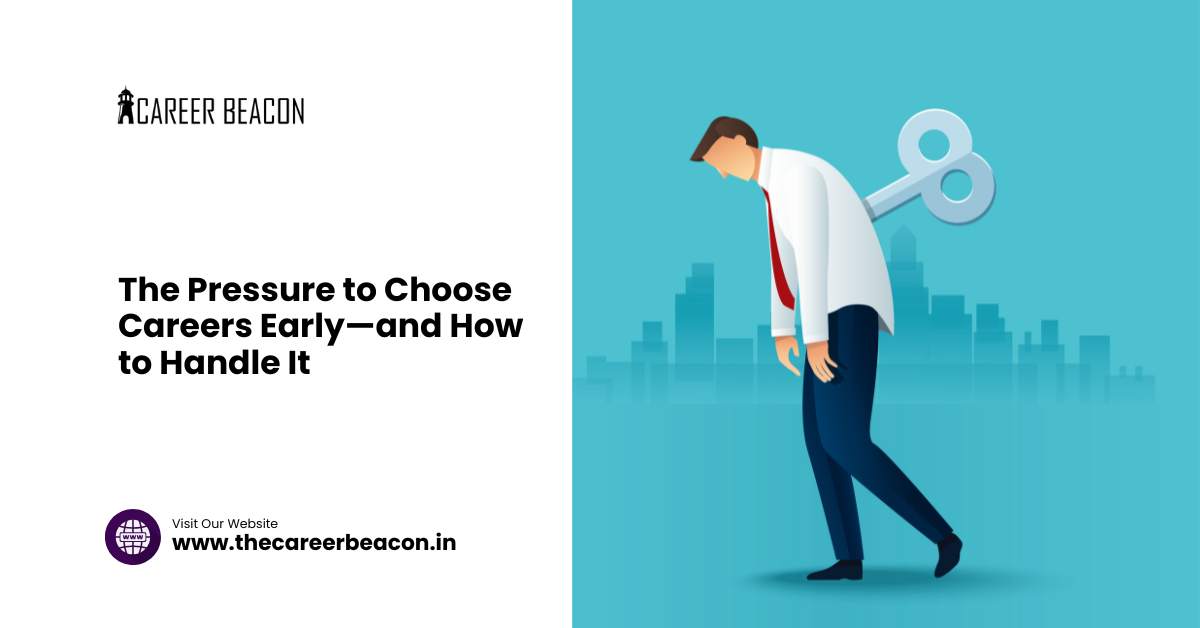
The pressure to choose careers too early can lead to anxiety, burnout, and loss of confidence. Students may feel trapped in paths they didn’t actively choose, resulting in low motivation and poor academic performance. Some develop a fear of failure, believing one wrong decision can ruin their future.
In extreme cases, this pressure can affect mental health, leading to stress-related issues and emotional exhaustion. It also discourages exploration and curiosity—two qualities essential for long-term career growth in a rapidly evolving job market.
Why Choosing Early Is Not Always Necessary
The contemporary work environment has become increasingly adaptable compared to previous generations. Career paths can be non-linear for many people, resulting in frequent changes to one’s occupation or industry. A large majority of the skills attained during one’s working life are transferable from one job or field to another and lifelong learning offers workers many opportunities for the re-invention of themselves.
If individuals can understand the current reality, they may feel less stressed over making a decision regarding their career choice too soon. What is more important than choosing the right career as quickly as possible, is acquiring a strong skill base in areas such as problem-solving, communication, adaptability, and digital literacy. Regardless of the career one ultimately pursues, these skills will continue to serve them well throughout their entire working life.
How Students Can Handle the Pressure to Choose Careers
One approach to relieve the stress of career planning is engaging in self-exploration. Instead of following fads, students should explore their personal interests, strengths and values. By taking career aptitude tests, trying out internships and joining school clubs, students will gain important information about themselves.
In addition to finding your own fit, students should seek advice from others. A career counselor can assist students in narrowing their choices and eliminating any uncertainty regarding what’s right for them. Speaking with people already working in their fields of interest can provide them with a better understanding of job options that go beyond just stereotype-based jobs.
Another important technique to relieve stress may be keeping options open. Selecting flexible degrees and taking skills-based courses will leave students room to change. Students must keep in mind that those decisions won’t be set in stone and they can change as time passes and their experiences grow.
What Parents and Educators Can Do
Parents and educators play a crucial role in reducing the pressure to choose careers. Instead of focusing solely on outcomes like salary or status, they should encourage curiosity, experimentation, and learning. Open conversations about career uncertainty can make students feel supported rather than judged.
Providing exposure (career talks, workshops, mentoring programs) helps students make informed decisions. Most importantly, adults should reassure students that it’s okay to take time to discover their path.
Conclusion
The pressure to choose careers early is real, but it doesn’t have to define a student’s future. In a world where careers evolve and skills matter more than rigid paths, flexibility and self-awareness are key. By focusing on exploration, guidance, and skill development, students can make confident career choices at the right time—without fear or regret.