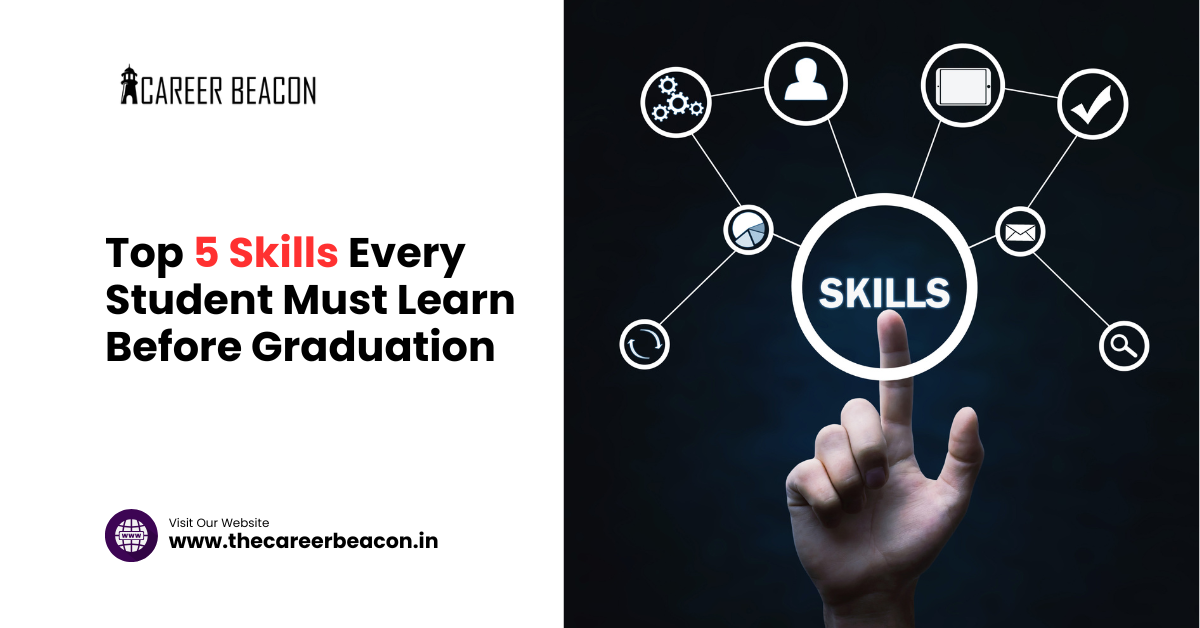
Top 5 Skills Every Student Must Learn Before Graduation
7 mins read

Top 5 Skills Every Student Must Learn Before Graduation

Graduation is an important milestone in every student’s life. However, earning a degree alone is no longer enough to succeed in today’s competitive job market. Employers are looking for candidates who can demonstrate practical abilities, adaptability, and problem-solving skills alongside academic knowledge.

As industries continue to evolve through technology, automation, and Artificial Intelligence, students must prepare themselves for challenges beyond the classroom. Developing the right skills before graduation can significantly improve career opportunities and help students stand out from the competition.

In this article, we explore the Skills Every Student Must Learn Before Graduation and why these abilities are becoming essential for long-term success.

Why Skills Matter More Than Ever

The modern workplace is changing quickly. Companies no longer hire only based on academic qualifications. Instead, they seek employees who can communicate well, solve problems, work with technology, and adjust to new situations.

Students who focus on building practical skills in college often find it easier to secure internships, placements, and jobs. These skills also help graduates perform better once they join the workforce.

Learning these skills early can ease the shift from student life to professional life.

1. Communication Skills

Communication remains one of the most valuable skills in every industry. Regardless of the profession, employees need to express ideas clearly, collaborate with teams, and interact with clients or customers.

Strong communication involves more than speaking fluently. It includes listening carefully, writing professionally, and presenting ideas with confidence.

Many talented graduates struggle during interviews because they cannot effectively communicate their knowledge and abilities. On the other hand, students with excellent communication skills often create a positive impression and build stronger professional relationships.

Developing this skill can improve academic performance, increase confidence, and enhance career prospects.

2. Digital Literacy

Technology is now a fundamental part of almost every job. As businesses adopt digital tools and automation, graduates must be comfortable working with technology.

Digital literacy goes beyond basic computer knowledge. It includes understanding productivity software, online collaboration platforms, data management tools, and emerging technologies.

Students should also familiarize themselves with Artificial Intelligence tools, cloud-based applications, and digital communication systems. These technologies are becoming increasingly common in workplaces across industries.

Employers value candidates who can quickly adapt to new digital environments and contribute from day one.

3. Critical Thinking and Problem-Solving

Employers consistently rank problem-solving among the most important workplace skills. Organizations need professionals who can analyze situations, evaluate information, and make informed decisions.

Critical thinking helps students approach challenges logically rather than relying on assumptions. It encourages creativity, innovation, and effective decision-making.

In a world where information is readily available, the ability to interpret and apply knowledge is often more important than memorizing facts.

Students who develop strong problem-solving abilities become valuable assets to employers because they can identify solutions and contribute to business growth.

4. Adaptability and Continuous Learning

The future of work is constantly evolving. New technologies, changing market conditions, and emerging industries require professionals to learn throughout their careers.

Adaptability allows individuals to respond effectively to change and remain productive in new situations. It is one of the most important qualities employers look for in modern graduates.

Students who embrace continuous learning are better prepared to handle workplace challenges and career transitions. They are also more likely to take advantage of new opportunities as industries evolve.

Whether learning a new software tool or adapting to a different work environment, flexibility can significantly improve career success.

5. Leadership and Teamwork

Leadership is not limited to management positions. Employers appreciate individuals who can take initiative, motivate others, and contribute positively to team environments.

At the same time, teamwork is equally important. Most workplace projects require collaboration among individuals with different backgrounds and expertise.

Students can develop leadership and teamwork skills through group projects, internships, student organizations, and volunteer activities. These experiences help them understand how to work effectively with others while taking responsibility for achieving shared goals.

Strong leadership and teamwork skills often lead to better career growth and professional development opportunities.

How Students Can Develop These Skills

Building professional skills does not require waiting until graduation. Students can begin developing these abilities during college through practical experiences and daily habits.

Participating in internships, joining student clubs, attending workshops, and working on personal projects can provide valuable opportunities for growth. Online courses and certifications can also help students strengthen technical and professional competencies.

The key is to remain consistent and actively seek opportunities to learn and improve.

The Growing Importance of Future-Ready Skills

As Artificial Intelligence and automation continue to reshape industries, employers are placing greater emphasis on human-centered skills. Communication, critical thinking, adaptability, and leadership are qualities that technology cannot easily replace.

Students who invest in these future-ready skills position themselves for long-term success. They become more employable, more confident, and better prepared to navigate an increasingly complex job market.

The ability to combine technical knowledge with strong professional skills will become a major advantage in the years ahead.

Conclusion

Investing in the Future: Preparing Students for Success by Developing Skills Before Graduation makes students ready for the challenges and realities they will face after finishing school

Employers want to hire graduates with strong practical and experiential capabilities as well as academic records to fill staffing needs. Employers also indicate that they have a desire to hire graduates with a good foundational growth mindset.

Communication, Digital Literacy, Critical Thinking, Flexibility/Adaptability and Leadership are not just skills in the workplace; they are skills that transfer to real-life success in all professions and industries.

A student who has begun developing these skills today can be better prepared to seize future opportunities than someone who did not start until graduation. All of the skills mentioned above will continue being valuable long after a person leaves school or any particular job.

FAQs

1. Why are skills important before graduation?

Skills help students become job-ready and improve their chances of securing internships, placements, and career opportunities.

2. Which skill is most important for students?

Communication is often considered one of the most important skills because it affects interviews, teamwork, and workplace performance.

3. How can students improve their professional skills?

Students can improve their skills through internships, online courses, workshops, volunteer work, and practical projects.

4. Are technical skills more important than soft skills?

Both are important. However, employers increasingly look for candidates who can combine technical expertise with strong communication and problem-solving abilities.

5. Can these skills help students in any career?

Yes. These skills are valuable across industries and can support long-term career growth regardless of profession.

Leave a Reply

This site uses Akismet to reduce spam. Learn how your comment data is processed.