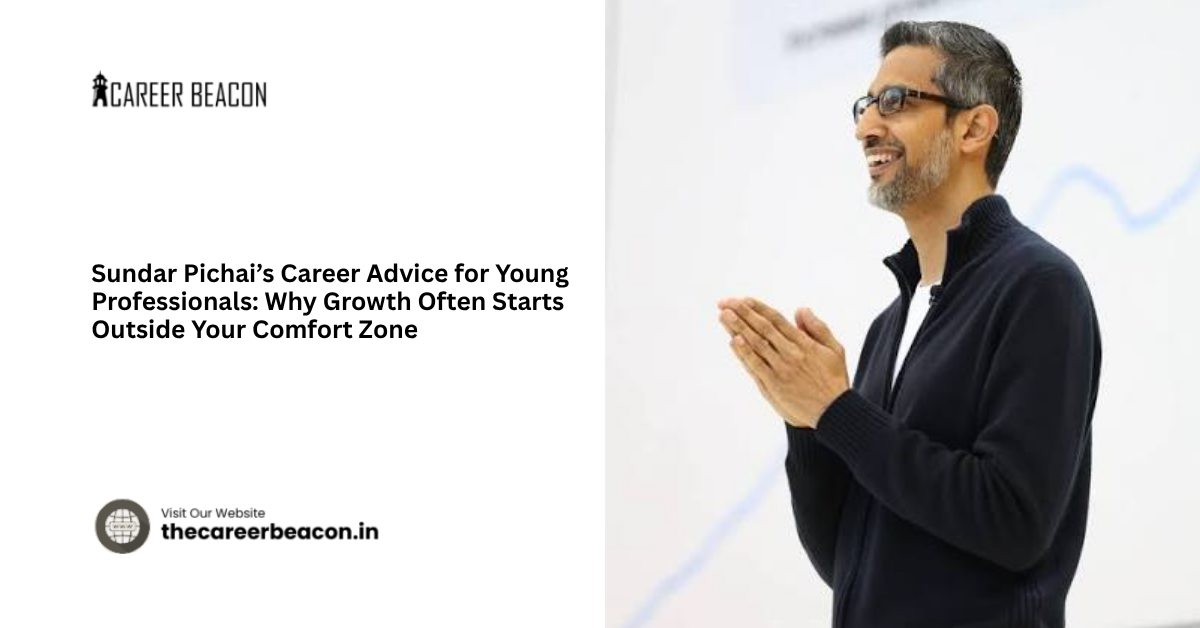
Sundar Pichai, the CEO of Google, has provided a piece of easy wisdom as far as careers go look for situations where you will not be entirely comfortable. According to Pichai, taking on jobs that involve people who may test your skills is the best way of learning and developing.
Pichai made these comments during a discussion with Lex Fridman where he recounted some experiences from his own career and explained the importance of working with those he sees as more skilled than himself.
The opinion is especially important for students and young graduates as workplaces are changing right before our eyes.
What Did Sundar Pichai Say About Career Growth?
Pichai stated that he had gone through situations where he worked with people whom he thought were more capable than him. Yet instead of shying away from such conditions, he looked upon them like chances to extend his skills.
His insight was about the importance of being open to situations that push you out of your comfort zone. He said leaving your comfort zone may allow you to find skills that you didn’t even know you had.
This does not entail putting yourself in uncomfortable situations for no reason. It can simply mean taking a challenging assignment, learning from people with more experience, or accepting an assignment that is just a bit beyond what you are capable of doing for now.
Why Uncomfortable Situations Can Help Young Professionals
Career wise, especially at the beginning, it is normal to look for stability. Yet, the most of learning is in fact when you are faced with a new problem or challenge.
For a fresher this may involve volunteering for presentation, taking up a complex project, or even learning technology that one is not yet familiar with.
Over time these will help to develop your problem-solving, communication and decision-making skills.
Work With People Who Challenge You
Among the pieces of advice that Pichai offers is advice about working with talented people.
Young people do not have to perceive those who are more experienced as competitors. They just need to pay attention to the way these people go about problem-solving, expressing their thoughts, and making decisions.
Being among people with strong points different from theirs helps employees think differently.
Internships, student projects, pubic communities, or first jobs can help fresh graduates get their feet wet in this field.
Do Not Let Fear Decide Every Career Move
Career decisions are often influenced by fear of failure. A person may avoid applying for a demanding role because they do not meet every requirement or refuse a challenging project because they are unsure of their abilities.
Pichai’s advice suggests looking at such situations differently.
Not every challenge will produce immediate success. However, attempting something difficult can provide feedback about what needs to be improved.
The key is to distinguish productive discomfort from an unhealthy work environment. Growth should not require accepting unreasonable pressure, discrimination or unsafe conditions.
Passion Also Matters in Career Decisions
Pichai has conveyed that it is important to enjoy one’s work. He has also pointed out in this context that it is better to pursue one’s call of the heart instead of simply sticking to logically derived career choices.
In practice, this means that the younger generation should focus on what they find truly engaging and interesting in their work while acquiring useful skills.
It should be kept in mind that there is no one correct career path. Trying various work tasks and responsibilities will help determine what type of work suits a person best.
What Young Professionals Can Learn From This Advice
Pichai’s comments offer several practical lessons:
Take on stretch opportunities: Accept projects that require you to learn something new.
Learn from stronger colleagues: Working with experienced people can expose you to better approaches and new perspectives.
Keep developing your skills: Do not stop learning once you get your first job.
Accept that mistakes are part of learning: Not every new responsibility will go perfectly.
Understand what interests you: Career growth becomes more sustainable when your work aligns with your interests and strengths.
The Career Lesson for Freshers
The main lesson for learners and recent graduates is not just getting out of one’s “comfort zone,” but also learning to do more things than previously done. Your first job can bring a completely different experience; rather than expecting to know everything, try to be a learner and think about what you can achieve in this position.
In the world of work where skills matter more than ever and technology is modifying jobs, being adaptable becomes an essential component of your career achievements.
Final Takeaway
Sundar Pichai’s career advice highlights a simple idea: professional growth does not always happen when everything feels easy. Working with talented people, accepting unfamiliar responsibilities and learning through challenges can help young professionals discover new capabilities.
For today’s students and early-career workers, building a career may be less about having a perfect plan from the beginning and more about staying curious, adaptable and willing to learn.
FAQs
1. What is Sundar Pichai’s career advice for young professionals?
Pichai has encouraged young professionals to work with people who challenge their abilities and to remain open to uncomfortable situations that can support learning and growth.
2. Why does Sundar Pichai recommend uncomfortable situations?
His point is that challenging environments can stretch a person’s abilities and sometimes reveal capabilities they did not realise they had.
3. What can freshers learn from Sundar Pichai’s advice?
Freshers can focus on continuous learning, taking on new responsibilities, learning from experienced colleagues and understanding which areas of work genuinely interest them.
4. Does stepping outside your comfort zone mean taking every difficult job?
No. Career growth does not require accepting unhealthy or unsafe working conditions. The idea is to take constructive challenges that provide opportunities to learn and develop.

 How to Become an Ecommerce Specialist and Get HiredOctober 17, 2026
 Study Abroad in 2026: Why Indian Students Are Exploring Europe Beyond Canada and the UKOctober 17, 2026
 Remote Jobs for Freshers in India 2027: Skills and Roles to WatchOctober 11, 2026
 India’s Job Market 2027: 10 Career Trends Students Should Watch NowOctober 8, 2026