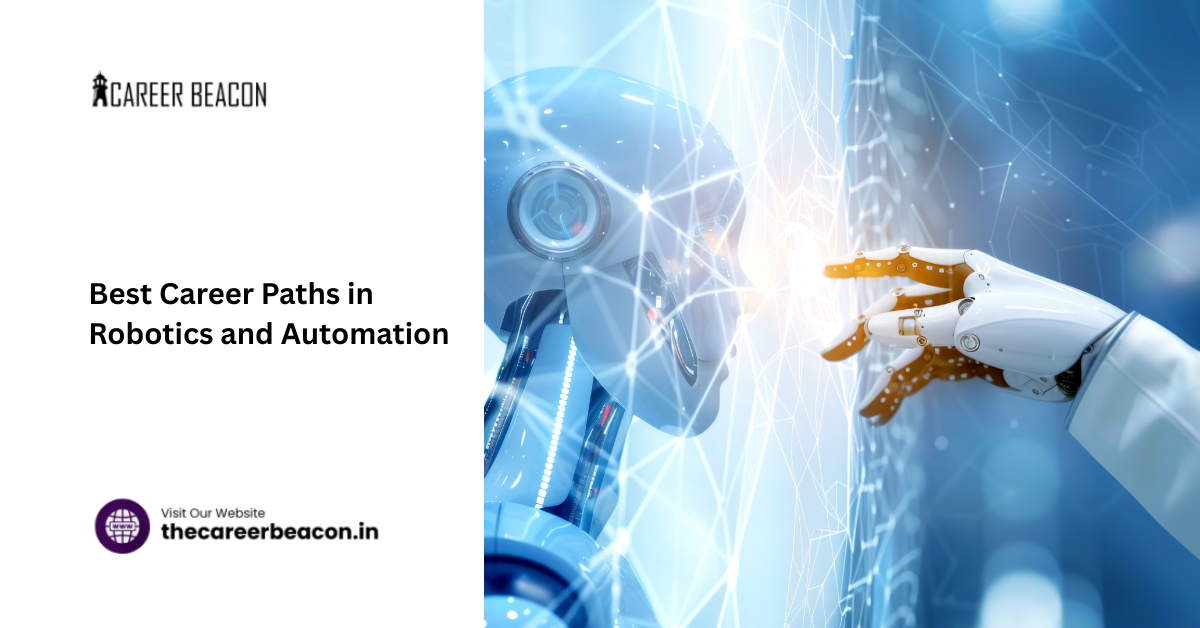
Best Career Paths in Robotics and Automation
The world is changing rapidly, and technology is driving this transformation. Among the fastest-growing fields are robotics and automation. From smart factories and self-driving vehicles to healthcare robots and warehouse automation, these technologies are reshaping industries across the globe. As businesses continue to adopt advanced systems, the demand for skilled professionals is increasing every year.
If you are a student or a working professional looking for a future-proof career, understanding the Best Career Paths in Robotics and Automation can help you make the right decision. These careers offer excellent salary packages, global opportunities, and long-term growth.
Why Robotics and Automation Are Growing
Robotics and automation have proven to be integral in contributing to higher levels of productivity and efficiency by virtue of their ability to lower expenditures and raise precision of the processes. This is why industries have been increasingly employing robots in performing tedious tasks, thus improving safety of the working environment and increasing effectiveness of the processes.
In addition, the emergence of the technologies such as artificial intelligence (AI), machine learning (ML), the Internet of Things (IoT) and a variety of sophisticated sensors made a huge leap forward in the development of robotics. This has led to businesses investing lots of money into automation and, thus, turning the robotics industry into one of the fastest growing areas of work today.
Moreover, the increased usage of Industry 4.0 in business contributed to elevation of the robotics field into one of the most promising professions in the years to come.
Robotics Engineer
A Robotics Engineer is engaged in the tasks of both designing and developing robotic systems that are used in different industries.
The work involves mechanics, software, sensors, and other control systems in the making of robots.
Robotics engineers work in industries like manufacturing, medical, military, aviation, automobile, research, etc. They work closely with software engineers, electronics experts, and AI professionals.
For this role, it is vital to have good knowledge of programming, electronics, mechanics, and automation.
Automation Engineer
The profession of an automation engineer involves building systems that minimize the amount of manpower utilized by making use of machines and software alike. They are responsible for erecting automated production lines, overseeing machines in factories and improving the production efficiency.
Automation engineers are vital to areas including pharmaceuticals, food processing, automotive manufacturing and energy.
Knowledge of PLC programming, SCADA systems, industrial robots, and control systems is valuable.
Artificial Intelligence Engineer
Modern robots rely heavily on Artificial Intelligence to make decisions and perform complex tasks. AI Engineers develop algorithms that enable robots to recognize objects, understand speech, and improve their performance through learning.
AI engineers work in robotics companies, research labs, healthcare organizations, and technology firms. They use machine learning, deep learning, and computer vision to make robots smarter and more efficient.
As AI adoption continues to increase, this career path offers excellent growth opportunities.
Mechatronics Engineer
Mechatronics combines mechanical engineering, electronics, computer science, and control engineering. Mechatronics Engineers design intelligent machines used in manufacturing, medical devices, drones, and automated equipment.
Students interested in both hardware and software often find this career highly rewarding because it offers opportunities across multiple industries.
Industrial Robotics Programmer
Industrial robots require specialized programming before they can perform tasks such as welding, painting, packaging, or assembly.
Industrial Robotics Programmers create and test these programs while ensuring that robotic systems operate safely and efficiently.
Manufacturing companies around the world continue to hire professionals with experience in robotic programming and industrial automation.
Robotics Software Developer
Software forms the brain of every modern robot. Robotics Software Developers create applications that control robotic movement, navigation, communication, and decision-making.
They work with programming languages such as Python, C++, and Java while using robotics frameworks and simulation tools.
Professionals in this field are in demand across technology companies, autonomous vehicle firms, and research organizations.
Computer Vision Engineer
Vision system engineers provide robots with the ability to comprehend visual data. They build systems that permit robots to spot objects, examine goods, identify people, and find their way around.
Computer vision has many applications including self-driving cars, medical imaging, security, manufacturing, and smart cities.
This profession blends artificial intelligence, image processing, and machine learning.
Research Scientist in Robotics
Students interested in innovation and advanced technology can build careers in robotics research. Research Scientists work on developing next-generation robots, intelligent systems, and automation technologies.
Universities, research institutes, government organizations, and technology companies regularly recruit professionals for robotics research projects.
Higher education such as M.Tech. or Ph.D. can improve opportunities in this field.
Robotics Maintenance Engineer
Robotic systems require regular maintenance to operate efficiently. Robotics Maintenance Engineers inspect equipment, troubleshoot problems, replace damaged components, and ensure smooth operations.
Manufacturing plants, warehouses, and industrial facilities depend on maintenance professionals to minimize downtime and maintain productivity.
This career offers stable employment because every automated system requires technical support.
Robotics Product Manager
Product Managers bridge the gap between technology and business. They understand customer needs, coordinate with engineering teams, and oversee the development of robotic products.
Professionals with both technical knowledge and management skills often succeed in this leadership role.
As robotics companies continue to launch innovative products, product management opportunities are increasing.
Skills Required for Robotics Careers
Students interested in robotics and automation should focus on developing both technical and soft skills. Programming languages such as Python and C++, electronics, control systems, Artificial Intelligence, embedded systems, mathematics, and mechanical engineering concepts form the technical foundation.
Communication, teamwork, creativity, analytical thinking, and problem-solving are equally important because robotics projects involve collaboration between multiple departments.
Practical projects, internships, and certifications can significantly strengthen your profile.
Industries Hiring Robotics Professionals
Robotics and automation professionals are required across many industries. Manufacturing companies use robots for production, healthcare organizations adopt robotic-assisted surgeries, logistics firms automate warehouses, and agriculture uses robotic equipment for precision farming.
Aerospace, defence, automotive, construction, renewable energy, mining, and smart city projects also provide exciting career opportunities.
As automation expands into new sectors, employment opportunities are expected to increase further.
Salary and Career Growth
Robotics is considered one of the highest-paying technology fields. Entry-level salaries vary depending on qualifications, skills, and employer. Candidates with expertise in AI, machine learning, automation, or robotics programming often receive better salary packages than general engineering graduates.
With experience, professionals can move into leadership roles, research positions, consulting, or entrepreneurship by developing innovative robotic solutions.
Continuous learning and industry certifications can further accelerate career growth.
How Students Can Start
Students should begin by building a strong foundation in mathematics, programming, electronics, and engineering fundamentals. Learning robotics platforms, participating in competitions, creating personal projects, and completing internships can provide valuable practical experience.
Online certifications in robotics, automation, AI, and IoT also help improve employability. Building a portfolio of projects demonstrates technical ability and increases the chances of securing internships and full-time jobs.
Conclusion
The Best Career Paths in Robotics and Automation offer exciting opportunities for students who enjoy innovation, technology, and problem-solving. As industries continue to embrace automation, professionals with robotics expertise will remain in high demand across India and globally.
Whether you choose to become a Robotics Engineer, Automation Engineer, AI Engineer, Computer Vision Specialist, or Robotics Software Developer, continuous learning and practical experience will be the key to long-term success. By developing the right skills today, students can build rewarding careers in one of the fastest-growing technology sectors.
Frequently Asked Questions
1. Is robotics a good career in India?
Yes. Robotics is one of the fastest-growing technology sectors, offering excellent career opportunities in manufacturing, healthcare, AI, defence, logistics, and research.
2. Which degree is best for robotics?
Students from Mechanical Engineering, Electronics, Electrical Engineering, Computer Science, Mechatronics, and Artificial Intelligence can pursue careers in robotics.
3. What skills are required for robotics?
Programming, Artificial Intelligence, automation, embedded systems, electronics, mathematics, control systems, and problem-solving are among the most important skills.
4. Can freshers get jobs in robotics?
Yes. Freshers with internships, certifications, and practical robotics projects have good opportunities in startups, research organizations, and technology companies.
5. Is robotics a future-proof career?
Yes. As automation and AI continue to grow, robotics is expected to remain one of the most promising and future-ready career fields.